


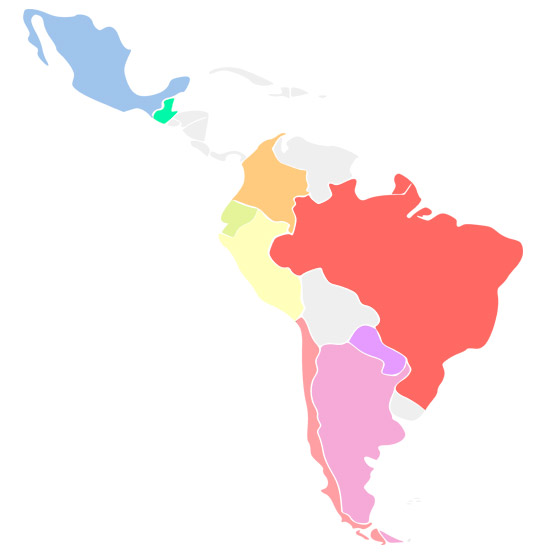
Number of LATAM projects between January 2026 and June 2026
| COUNTRIES | PROJECTS | |
|---|---|---|
| ARGENTINA | 63 | |
| BRAZIL | 36 | |
| CHILE | 16 | |
| COLOMBIA | 14 | |
| ECUADOR | 5 | |
| GUATEMALA | 1 | |
| MEXICO | 35 | |
| PARAGUAY | 14 | |
| PERU | 17 |
Topics of bills introduced between January 2026 and June 2026
| Freedom of expression and political rights | 19.9 % | |
| Discrimination, violence and hate speech | 15.4 % | |
| Protection of minors | 11.4 % | |
| Privacy and ARCO rights | 7.5 % | |
| Artificial Intelligence | 7.0 % | |
| Consumer rights | 5.0 % |
| Honor and reputation | 5.0 % | |
| Cybersecurity | 4.0 % | |
| Content Moderation and Liability of Intermediaries | 3.5 % | |
| Access to information | 2.5 % | |
| Public order | 2.5 % | |
| Public Morality | 2.0 % | |
| Intellectual Property | 2.0 % |
Topics of bills introduced between January 2026 and June 2026
| Freedom of Expression and Political Rights | 19.9 % | |
| Discrimination, violence and hate speech | 15.4 % | |
| Protection of minors | 11.4 % | |
| Privacy and ARCO rights | 7.5 % | |
| Artificial intelligence | 7.0 % | |
| Consumer rights | 5.0 % | |
| Honor and reputation | 5.0 % | |
| Cybersecurity | 4.0 % | |
| Content moderation | 3.5 % | |
| Access to information | 2.5 % | |
| Public order | 2.5 % | |
| Intellectual Property | 2.0 % | |
| Public Morality | 2.0 % | |
| Others | 11.0 % |
02/06
He appeared before the Senate on Bill 949/26, which seeks to establish a comprehensive and unified regulatory framework for the civil liability of digital platforms regarding child protection obligations and the establishment of sovereign parental control measures.
PROTECTION OF MINORS
09/06
was presented on Bill 2733-D-2026which seeks to establish a system of protections for the use of social media by children and adolescents. This includes, but is not limited to, the civil liability of platforms, the risk classification of platforms, the absolute prohibition of access to social media for minors under 14, security filters and blocking of harmful content, etc.
PROTECTION OF MINORS
09/06
was presented on Bill 2744-D-2026, which seeks to amend the Penal Code to explicitly include in the penalty for production and/or dissemination of child sexual abuse material those who use Artificial Intelligence to modify or generate such material.
PROTECTION OF MINORS ARTIFICIAL INTELLIGENCE
16/06
was presented on Bill 2832-D-2026The bill seeks to amend Law 23.592, on Discriminatory Acts, to include in the definition of discriminatory acts the incitement or encouragement of the destruction of a state and/or specific territorial entity based on race, ethnicity, religion, nationality, ideology, political or union affiliation, sex, economic status, social condition, or physical characteristics. According to the bill's rationale, this is intended to combat antisemitism in the form of demonstrations against the existence of the State of Israel.
HATE SPEECH
18/06
was presented on Bill 2912-D-2026, which seeks to establish a regulatory framework for the design, acquisition, implementation and use of Artificial Intelligence systems by the National State, in order to ensure the protection of fundamental human rights, the transparency of automated decisions, the protection of personal data and the human supervision of processes that may produce legal effects or significant impacts on citizens.
ARTIFICIAL INTELLIGENCE
01/06
It was presented to the Chamber of Deputies on Bulletin 18318-19, consolidated with 18224-18, 18246-18. This is an initiative that seeks to establish a system of protections for the use of social networks by children and adolescents. This includes, but is not limited to, the absolute prohibition of access to social networks for minors under 14 and the restriction of access to conversational artificial intelligence systems, among other provisions.
PROTECTION OF MINORS
02/06
He entered the Chamber of Deputies on Bulletin 18320-18The bill contains a proposal to amend Law No. 21.430, on Guarantees and Comprehensive Protection of the Rights of Children and Adolescents. The amendment would establish that social media providers are responsible for taking measures to prevent minors under sixteen years of age from creating or maintaining accounts on their platforms.
PROTECTION OF MINORS
03/06
It was presented in the Senate on Bulletin 18300-04, a motion to prohibit social media service providers from allowing the creation, maintenance or use of accounts by persons under the age of fourteen.
PROTECTION OF MINORS
04/06
A motion was presented in the Chamber of Deputies, through the Bulletin 18324-07To incorporate the figure of the “online undercover agent” into the Criminal Procedure Code. This would be a police officer acting under a false identity in communications maintained through closed communication channels, in order to clarify facts involving participation in a criminal organization, establish the identity and involvement of its leaders, learn the organization's plans, and prevent the commission of its crimes or verify those already committed. The online undercover agent may exchange or send illicit files due to their content, and may also obtain images and recordings of said communications.
INTELLIGENCE
07/06
Congresswoman Rocío Abed presented a draft declaration which urges various state institutions toInvestigate the installation of posters with offensive content in public spaces in Ciudad del Este. The controversy arose after one of the screens displayed an image of former Brazilian President Jair Bolsonaro in a scene where he appeared to be hitting a player from the Paraguayan national team, accompanied by messages suggesting a supposed superiority of Brazil over Paraguay.
FREEDOM OF EXPRESSION
03/06
The Foundation for Press Freedom (FLIP) warned that attacks against journalists during the coverage of the Colombian presidential elections increased by 227% compared to the 2022 electoral process. The organization recorded 59 attacks related to the campaign and election day between January and May of this year.
FREEDOM OF THE PRESS ELECTORAL
03/06
Following a lawsuit alleging unconstitutionality filed by José David Riveros Namen, the Constitutional Court eliminated key provisions of the Survey ActThe restriction in Article 5, which stipulated that opinion polls could only be conducted within the three months preceding the first day of candidate registration, was eliminated. Likewise, requirements in Article 12, which mandated that polling firms provide the computer codes necessary to recreate the sample units and telephone numbers used in telephone surveys, were also removed. These provisions were deemed to disproportionately limit the right to information and freedom of expression, and to violate the right to privacy and habeas data.
FREEDOM OF EXPRESSION RIGHT TO PRIVACY ELECTORAL
18/06
The Ombudsman reported Between January 1 and June 11, 2026, 161 demonstrations and social mobilizations related to the electoral process were recorded in Bogotá and 71 municipalities across 26 departments of the country. According to the agency, 64% of these activities were entirely peaceful, while the remaining 36% resulted in disruptions to traffic and public or private infrastructure.
RIGHT TO PROTEST ELECTORAL
18/06
was presented on Bill 482642 This would amend the Comprehensive Organic Criminal Code and the Comprehensive Organic Law to Prevent and Eradicate Violence against Women in order to establish greater protections against digital violence crimes against women. These include: the criminalization of digital grooming, the use of artificial intelligence to generate or modify non-consensual intimate or sexual content, doxxing, and the non-consensual dissemination of intimate sexual content and revenge porn; as well as the implementation of institutions and tools to combat these and other forms of digital violence against women.
GENDER VIOLENCE DIGITAL PLATFORMS
23/05
ARTICLE 19, together with other national and international organizations, alerted Regarding the arbitrary use of artificial intelligence-related criminal offenses in the San Luis Potosí Penal Code to detain journalists, media workers, and critical voices in the state, the organizations reported that in the previous 48 hours, they documented the arrest of Christian Herrera, content creator for the Facebook page "Código Rojo" in Ciudad Valles—who was being held incommunicado from his family—as well as the arrest of journalist Eréndira Reyes Aguillón, director of the page "San Wicho Times," and her daughter Alejandra Hermosillo, a public official. A judge ordered their pretrial detention for the crime of identity theft, stemming from the unauthorized use of images or voices generated by artificial intelligence. They also warned of arrest warrants issued against at least nine other people, including journalist Anahí Torres González, allegedly linked to the dissemination of a video on social media that accused Governor Ricardo Gallardo and the State Civil Guard of collaborating with organized crime. The organizations pointed out that, if it is confirmed that the procedure is based on a video published before the entry into force of the November 2025 reform, it would constitute a retroactive application of the law prohibited by Article 14 of the Constitution, and they highlighted irregularities in due process, such as the use of arrest warrants instead of summonses, the opacity regarding the legal situation of the detained persons and the use of criminal law as a mechanism of silencing, in contravention of the tripartite test of legality, necessity and proportionality.
ARTIFICIAL INTELLIGENCE FREEDOM OF THE PRESS CENSORSHIP
05/06
Citizens of San Luis Potosí, in collaboration with ARTICLE 19, they presented A citizen initiative has been presented to the State Congress to repeal Articles 187 TER, 272 BIS, and 272 TER of the State Penal Code, which criminalize various behaviors under the generic term "misuse of artificial intelligence to provoke social alarm." These articles were incorporated through a reform that took effect at the end of 2025. These criminal offenses penalize the creation or dissemination, without consent, of content that simulates the appearance, voice, or identity of a real person (187 TER); the malicious dissemination of disinformation generated with artificial intelligence to disrupt social peace (272 BIS); and institutional manipulation through content that simulates statements or actions of authorities (272 TER). Those who promoted the initiative warned that these provisions lack clarity, as they do not establish objective criteria to distinguish legitimate criticism of authorities from punishable conduct, thus granting the authorities broad discretion to prosecute critical expressions or materials of public interest. They also pointed out that the penalties are disproportionate—Article 272 TER provides for three to six years in prison, higher than that of certain property crimes—and that, less than six months after its entry into force, the criminal offenses have already been used to generate judicial harassment and issue arrest warrants against at least ten people, including journalists and content creators, creating a chilling effect on freedom of expression.
ARTIFICIAL INTELLIGENCE FREEDOM OF EXPRESSION
18/05
was presented on Bill No. 2.435/2026The bill, authored by federal deputy Fausto Pinato (UNIÃO/SP), establishes the National System for the Prevention and Fight against Digital Violence against Women and Girls. The proposal modifies the Criminal Code and the Code of Criminal Procedure to include manipulated, synthetic, or simulated content, including that generated by artificial intelligence (AI), among the crimes related to the non-consensual dissemination of intimate content. The text also establishes protocols for the preservation, analysis, and management of digital evidence. Furthermore, it provides for measures to assist, support, and protect victims of digital violence through professional training for public officials and public digital education and awareness campaigns. The proposal comes amid growing concern about violence against women in the digital sphere, in line with recent initiatives by the Executive Branch, such as the Decree No. 12.976/2026, which establishes guidelines for the protection of women on the Internet.
SEXUAL HARASSMENT ARTIFICIAL INTELLIGENCE
18/05
was presented on Bill No. 2.452/2026The bill, authored by Federal Deputy Ismael Alexandrino (PSD/GO), establishes mandatory age-based ratings for audiovisual content aimed at young children, broadcast in commercial venues, television networks, streaming platforms, apps, and social media. The bill sets mandatory parameters for classifying children's content, including a ban on content containing violence, bullying, sexual content, child sexualization, intense sensory stimulation, and conflicts without peaceful resolution. The text also assigns obligations to digital platforms, such as implementing age verification systems, conducting pre-audits of available children's content, and establishing reporting channels.
PROTECTION OF MINORS DIGITAL PLATFORMS
20/05
President Luiz Inácio Lula da Silva promulgated the decrees 12.975/2026 y 12.976/2026which amend the regulations of the Civil Framework for the Internet and establish protection measures for women in the digital environment. Decree 12.975/2026 updates the Decree No. 8.771/2016, incorporating recent interpretations by the Federal Supreme Court (STF) on the liability of intermediaries for damages arising from third-party content, as established in the ruling on the constitutionality of article 19 of the Civil Framework for the InternetAmong the measures foreseen, the decree establishes the procedures that application providers must adopt for content moderation, including procedural safeguards and complaint channels for users. The text also grants the National Data Protection Agency (ANPD) the authority to oversee compliance with the regulation, allowing it to define differentiated criteria, taking into account the provider's economic size, the level of interference with the circulation of third-party content, and the risks involved in the service, especially in the case of smaller providers. For its part, the Decree No. 12.976/2026 It establishes guidelines for the protection of women online. The proposal regulates the obligations of digital platforms in preventing and combating violence against women, including reporting mechanisms and content moderation. The measures were announced during the ceremony marking 100 days of Brazil's National Pact against Femicide.
GENDER VIOLENCE DIGITAL PLATFORMS
29/05
Judge Douglas de Melo Martins, of the Court of Diffuse and Collective Interests of São Luís, of the Court of Justice of Maranhão (TJ-MA), considered the Public civil lawsuit filed by consumer protection entities against Raia Drogasil SA, prohibiting the practice of conditioning discounts on the customer providing their CPF number or any other personal dataThe lawsuit challenged the mass collection of data without free and informed consent for marketing and profiling purposes. In the ruling, the judge emphasized that this practice subjects customers to "economic coercion," especially in the purchase of medicines, constituting unfair advantage and indirect tied selling, both prohibited by law. Consumer Protection CodeIn response, in addition to prohibiting such conduct under penalty of a daily fine of 100.000 reais, the magistrate sentenced Raia Drogasil to pay 10 million reais for collective moral damages, an amount that will be allocated to the State Fund for the Protection of Diffuse Rights.
CONSUMER PROTECTION
01/06
was presented on Bill No. 2.765/2026, authored by federal deputy Ribeiro Neto (SOLIDARIEDADE/MA), which modifies the Statute of Racial Equality (Law No. 12.288/2010) With the aim of promoting the digital and economic inclusion of Quilombola communities, the amendment complements Article 42 of the Statute, which establishes that the federal Executive Branch may set criteria to expand the participation of Black people in committee positions and positions of trust. It also stipulates that federal policies and programs must promote economic inclusion, digital inclusion, connectivity, innovation, and digital transformation, taking into account the specific needs of Quilombola communities. The bill also includes measures designed to expand access to the internet and digital infrastructure, provide training in technological skills, and foster entrepreneurship.
ACCESSIBILITY
12/06
The full Congress approved, with 83 votes in favor, the report of the investigative commission chaired by Congressman Alejandro Muñante on the effective collaboration agreement with Odebrecht, which recommends that the Public Prosecutor's Office evaluate criminal charges against journalist Gustavo GorritiThe director of IDL-Reporteros, is facing charges of bribery, influence peddling, and obstruction of justice. The parliamentary initiative to criminally hold a journalist responsible for reporting on investigative progress and issuing editorials poses a serious threat to press freedom, constitutes an attempt to criminalize investigative journalism, and sends an intimidating message to all journalists covering corruption cases.
FREEDOM OF THE PRESS CENSORSHIP
13/06
The Law No. 32645The law establishes the Professional College of Artists of Peru (CPAP), a public institution tasked with representing, regulating, and overseeing the professional practice of artistic disciplines. The law requires a university or higher education degree as a prerequisite for membership, a requirement that has generated widespread rejection within the artistic community for excluding those without formal training. Critics also point out that the CPAP's powers to "regulate and oversee" artistic disciplines open the door to mechanisms of control and potential indirect censorship of cultural production.
FREEDOM OF EXPRESSION
19/06
The Specialized Public Prosecutor's Office for Crimes Against Public Order filed a criminal complaint before the Prosecutor's Office for the alleged crime of disturbing public order against nine people, including the communicators Hernando Cevallos, Claudia Cisneros, Pavel Yábar and César Tito Rojas, for having disseminated on their social networks calls for the march of June 19; seeking to criminalize the call for a peaceful protest as a form of direct intimidation of the exercise of freedom of expression and the right to assembly.
FREEDOM OF EXPRESSION
